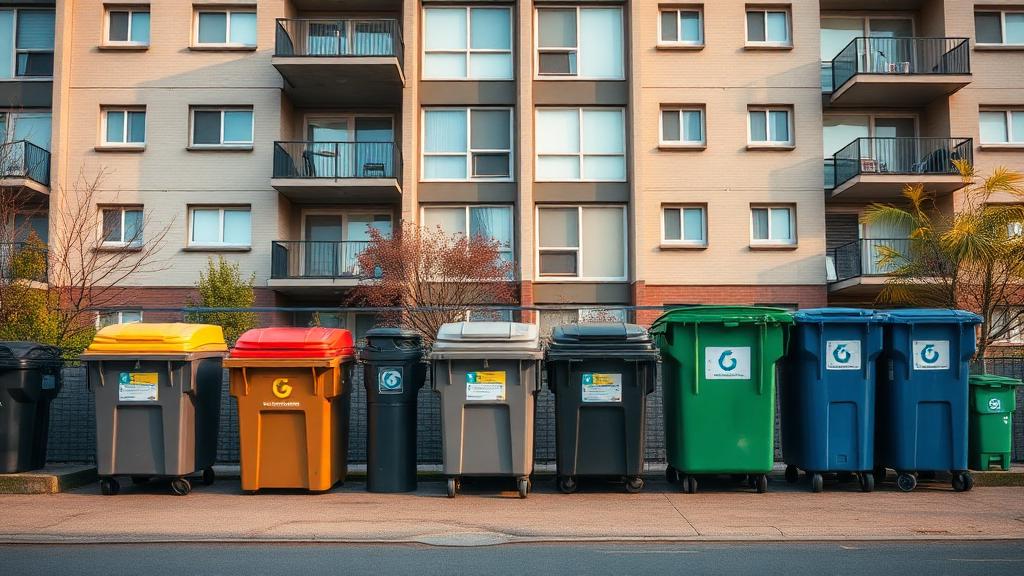
Why Waste Isn't a One-Size-Fits-All Problem
Every commercial property generates waste, but the composition, volume, regulatory requirements, and service needs vary dramatically by property type. A 300-unit multifamily community has almost nothing in common with a 200,000-square-foot industrial warehouse when it comes to waste management. Yet haulers routinely apply the same contract templates across both.
That mismatch is where the overspending begins.
Multifamily Properties
Multifamily is the most complex waste environment in commercial real estate. Hundreds of individual households generate highly variable waste volumes that fluctuate with move-in and move-out cycles, holidays, and seasonal patterns.
- •Primary streams: Municipal solid waste (MSW), single-stream recycling, bulky item disposal
- •Common challenges: Contamination in recycling streams, overflowing compactors during peak turnover, inadequate valet trash coverage
- •Optimization opportunity: Right-sizing container counts and pickup frequencies based on actual volume data rather than hauler estimates
Most multifamily properties are over-serviced during slow months and under-serviced during peak periods. A national vendor management approach uses portfolio-wide data to calibrate service levels accurately.
Healthcare Facilities
Healthcare properties face the most regulated waste environment. Mixing waste streams isn't just inefficient — it creates compliance risk and potential fines.
- •Primary streams: Regulated medical waste (RMW), pharmaceutical waste, general MSW, recycling, confidential document destruction
- •Common challenges: Improper segregation leading to expensive contamination events, over-classification of general waste as medical waste, lack of staff training on waste handling protocols
- •Optimization opportunity: Auditing the ratio of medical waste to general waste frequently reveals that 20% to 40% of what's being treated as regulated medical waste is actually general refuse
The cost differential between medical waste disposal and standard MSW disposal is substantial. Correcting the classification alone can produce significant savings without any change in hauler or service frequency.
Senior Living Communities
Senior living combines elements of both multifamily and healthcare waste profiles, creating a hybrid environment that's often poorly understood by haulers.
- •Primary streams: MSW, recycling, limited regulated medical waste, dining services organic waste, incontinence product disposal
- •Common challenges: Higher per-unit waste generation than standard multifamily, dining service waste volumes that require specialized pickup schedules, compliance requirements that vary by state and care level
- •Optimization opportunity: Separating dining waste from general MSW and negotiating appropriate service levels for each stream
Office Properties
Office buildings generate relatively predictable waste volumes, but that predictability often leads to complacency in contract management.
- •Primary streams: Paper and cardboard recycling, MSW, electronic waste, confidential document destruction
- •Common challenges: Tenant-driven variability in recycling participation, janitorial contracts that don't align with waste hauler schedules, green building certification requirements (LEED, WELL) that demand specific diversion rates
- •Optimization opportunity: Coordinating janitorial and waste services to eliminate redundant pickups and ensure recycling streams are properly maintained
Retail Properties
Retail waste profiles are driven by tenant mix and can vary enormously within a single property.
- •Primary streams: Cardboard and packaging (often the largest stream), MSW, food waste from restaurant tenants, cooking oil recycling
- •Common challenges: Shared compactor management across multiple tenants, inequitable cost allocation, food waste contamination in recycling streams
- •Optimization opportunity: Implementing tenant-level waste tracking to allocate costs fairly and identify the highest-volume generators for targeted reduction programs
Industrial Properties
Industrial waste is typically high-volume but narrower in composition, making it more straightforward to optimize — if someone is actually paying attention.
- •Primary streams: Construction and demolition debris, scrap materials, packaging waste, MSW from office areas
- •Common challenges: Hauler contracts based on estimated rather than actual tonnage, roll-off container scheduling that doesn't match production cycles, hazardous waste compliance gaps
- •Optimization opportunity: Switching from flat-rate to weight-based billing and aligning container schedules with actual production output
The Portfolio-Level View
When a single portfolio spans multifamily, healthcare, retail, and industrial properties, the waste management challenge becomes exponentially more complex. Each property type requires different service configurations, different hauler capabilities, and different compliance standards.
This is precisely where national coordination creates the most value. A dedicated waste management partner understands these differences and builds service programs tailored to each property type — while leveraging the portfolio's total spend for competitive pricing across all of them.
Start With an Audit
The first step is understanding what each property in your portfolio actually generates, what you're paying for, and whether the two align. A simple invoice review can reveal whether your current contracts reflect your actual waste profile — or a hauler's best guess.
Frequently Asked Questions
- How do waste streams differ between multifamily and healthcare properties?
- Multifamily properties primarily generate municipal solid waste (MSW) and single-stream recycling with bulky item disposal. Healthcare facilities add regulated medical waste, pharmaceutical waste, and confidential document destruction, each with specific handling requirements and significantly higher disposal costs.
- Why do healthcare properties often overspend on waste disposal?
- Healthcare properties frequently over-classify general refuse as regulated medical waste. Since medical waste disposal costs substantially more than standard MSW, auditing the waste classification ratio often reveals that 20% to 40% of material being treated as medical waste is actually general refuse that could be disposed of at standard rates.
- How does a national vendor management partner handle different property types?
- A national partner builds tailored service programs for each property type — addressing the specific waste streams, compliance requirements, and service frequencies each generates — while leveraging the portfolio's total spend across all property types for competitive pricing.
- What is the most common waste management mistake in retail properties?
- The most common mistake is failing to implement tenant-level waste tracking. Without it, costs are allocated inequitably, high-volume generators aren't identified, and food waste from restaurant tenants contaminates recycling streams, increasing disposal costs for the entire property.
Nexus National
National vendor management for commercial real estate portfolios.
Find Out What You're Really Paying
Upload a recent waste invoice for a free savings analysis, or reach out to learn how Nexus National coordinates waste services across commercial portfolios nationwide.